Saturday, February 20, 2021

The Sheep Clone

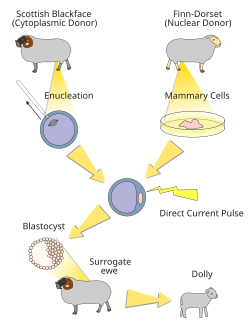
Dolly (5 July 1996 – 14 February 2003) was a female domestic sheep, and the first mammal cloned from an adult somatic cell, using the process of nuclear transfer.


Dolly face closeup.jpg 


Sunday, June 3, 2018

Funny Cartoon Animal- In Real Life!- Timon (Lion King)

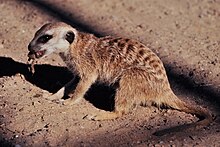
Timon is not a cat. Nor is he a kat. He is also not a mirror. Rather, he is a meerkat.

Timon (The Lion King).png


Meerkats IN REAL LIFE


Meerkats are small burrowing animals, living in large underground networks with multiple entrances which they leave only during the day, except to avoid the heat of the afternoon.[32] They are very social creatures and they live in colonies together.[15] Animals in the same group groom each other regularly.[21] The alpha pair often scent-mark subordinates of the group to express their authority.[33] There may be up to 30 meerkats in a group.[15]
To look out for predators, one or more meerkats stand sentry, to warn others of approaching dangers.[34] When a predator is spotted, the meerkat performing as sentry gives a warning bark or whistle, and other members of the group run and hide in one of the many holes they have spread across their territory.[35]


Meerkats are primarily insectivores, but also eat other animals (lizardssnakesscorpionsspiderseggs, small mammalsmillipedescentipedes and, more rarely, small birds), plants and fungi (the desert truffle Kalaharituber pfeilii[18]). Meerkats are immune to certain types of venom, including the very strong venom of the scorpions of the Kalahari Desert.[19]


Wednesday, November 23, 2016

Unicorns, Fact or Fiction

When you hear the word unicorn, what do you think of? If you're hungry, you may think of corn, the ubiquitous yellow vegetable. If you’re like most people who have already ate today, you probably imagine a horse with a horn.

A horse with a horn. Haha. Nonsense. Impossible. Never. Unicorns are merely animals of either tame, or wild and perverse fantasies.

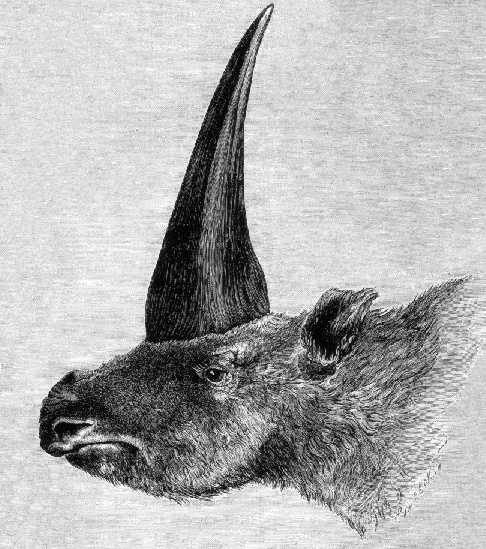
But what if I told you, there was a time that unicorns and people roamed the planet at the same time! And that these unicorns did not look like what you typically imagine when you think of unicorns, single stalks of corn. Rather, they kind of looked like fluffy rhinos. 


Thursday, April 14, 2016

Funny Cartoon Animal- In Real Life!- Mickey Mouse


The most infamous mouse on the planet. Mickey Mouse made his first appearance in 1928's Steamboat Willie. Why he isn't called Willie the Mouse, the world will never know.
Steamboat Willie.jpg
MICE IN REAL LIFE

Rodents. Some keep them as pets. Pet mice aren't too terrible.

However, some can be a bit mechanical.


Monday, January 18, 2016

Muscovy Duck

Hello all. Today we will be taking a moment to admire the majestic Muscovy. This creature is one of my favorite ducks! The photos truly do not do it justice (like my selfies).

The Muscovy is originally native to MexicoCentral, and South America. Not unlike Toyota automobiles, the domesticated Muscovy comes in a variety of colors; Black, Blue, Chocolate, Pied (white with any color mixed), White, Lavender, Bronze, Ripple and many more pastel colors, but these are very rare.


However, the true wild Muscovy duck, from which all domesticated Muscovys originated, is blackish, with large white wing patches.      TRY RAISING YOUR OWN DUCK!!

File:Muscovy Duck SMTC.jpg

Saturday, August 8, 2015

Funny Cartoon Animal- In Real Life!- Patrick Star (Starfish)

First of all, I'd like to make it clear that starfishes DO NOT come from otterspace. 


Rather, starfish are marine invertebrates. That means they live in the ocean! 
Despite the name, starfish are NOT fish. They do not have gills, scales, or fins like fish do and they move differently from fish. Fish propel themselves with their tails, starfish have tiny tube feet to help them move along.
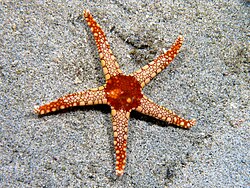
Fromia monilis (Seastar).jpg
The five-armed varieties of starfish are the most well known. But, not all starfish have five arms. Some have many more. Take the sun star for example, it has up to 40 arms!


Patrick Star


You probably are somewhat aware of the lovable character Patrick Star. If you're not, have you been living under a rock or something? (It's funny because Patrick lives under a rock) 


Patrick's most notable trait is his lack of common sense. Patrick is often getting himself and his best friend, SpongeBob SquarePants, into trouble.

Patrick Star Fun Fact!  (Stump your friends with this bit of information) Patrick is unemployed and a self-proclaimed expert in the "art of doing nothing".


Wednesday, May 14, 2014

Lion Dog

Officials at a Chinese zoo attempted to pass off this Tibetan mastiff as an African lion (AFP)


The People’s Park of Luohe in the Chinese province Henan has an amazing “African lion” on exhibit for spectators. But the most amazing fact about this proud creature is that it’s actually a dog, not a lion.
As Agence France-Presse reports, the hoax was exposed when the dog, a Tibetan mastiff, started barking.
According to the state-run publication Beijing Youth Daily, a mother and son heard the unexpected sound coming from the alleged lion during a recent visit to the zoo.
The paper says the zoo has been replacing exotic species with substitutes, including placing two rodents in a snake’s cage, a white fox in a leopard’s den and a common dog in a wolf’s pen.

Friday, October 25, 2013

Extinct Animals- Pig-footed bandicoot

The saddening story of today is that of the Pig-footed bandicoot. 

This one is doubly depressing to me, because as all Funny Pets diehards know, Crash Bandicoot  is one of our biggest stars.

The pig-footed bandicoot, was a small marsupial of the arid plains of Australia. The range of the species was later reduced to an inland desert region, where it was last recorded in the 1950s, and is now presumed to be extinct.


The pig-footed bandicoot had a body size of 23–26 cm and a 10–15 cm long tail. In form, it was almost bilby-like on first sight, having long, slender limbs, large, pointed ears, and a long tail. On closer examination, however, it became apparent that the pig-footed bandicoot was very unusual for a marsupial. The forefeet had two functional toes with hoof-like nails, rather similar to a pig or deer. The hind feet had an enlarged fourth toe with a heavy claw shaped like a tiny horse's hoof, with the other toes being vestigial:only the fused second and third toes being useful, and that not for locomotion but for grooming.

Its fur was coarse and straight, but not spiny. In color it varied from grizzled grey through fawn to orange-brown, the belly and underparts were white with the fur on the ears being of chestnut color.


File:Pig-footed Bandicoot Pengo.jpg


This species had five pairs of upper and three pairs of lower incision teeth. The females of the species had eight nipples and the opening of the pouch was faced backwards, not forwards as is the case with kangaroos.


Few scientists had the opportunity to observe a live pig-footed bandicoot. The Aboriginal people of central Australia, who knew it well and reported that if disturbed, it was capable of running with considerable speed by breaking into a smooth, galloping sprint.


It was a solitary, nocturnal animal that would sleep in its shelter during the day and emerge in the evening to feed, using its keen sense of smell to find food.


It appears that the pig-footed bandicoot was the most herbivorous of bandicoots; although captive specimens were fond of meat and Aborigines reported that it ate grasshoppers, ants and termites, the bulk of its diet was almost certainly leaves, roots and grasses. In captivity it was observed that they drank "a good deal of water".


According to Indigenous Australians, this species was rare even before the arrival of Europeans on the continent and was in a serious decline even as it first came to scientific notice in the middle years of the 19th century.  By 1945 the species vanished from South Australia and was reported to be limited to "a slight foothold in central Australia". Nevertheless, Aboriginal people report that it survived as late as the 1950s in the Gibson Desert and the Great Sandy Desert of Western Australia.


The cause of the extinction remains uncertain: neither of the two most destructive introduced exterminator species, the fox and the rabbit, had yet arrived in south-west Western Australia when the pig-footed bandicoot disappeared from that area. Feral cats were already common, which may offer an explanation; it is perhaps more likely that the decline was caused by a double habitat change. Firstly, the end of many thousands of years of Aboriginal burning which, being confined to a patchwork of small areas at any one time, had ensured both fresh new growth in the recently burnt areas and adjacent older growth for shelter and as a base for recolonisation. However, Australia's Aboriginal population had declined by around 90% during the 19th century, largely because of the introduction of European diseases, and the remaining Aborigines were often no longer permitted to carry on their traditional land-management and hunting practices. Secondly, following on the heels of the near-extermination of the Aborigines, came the introduction of vast numbers of sheep and cattle, leading to significant changes in soil structure, plant growth, and food availability.


File:Mus Nat Hist Nat 25022013 Chaeropus ecaudatus.jpg


PIG-FOOTED BANDICOOT, GONE BUT NEVER FORGOTTEN